

Choosing a vibrator can feel surprisingly complicated. There are different shapes, sizes, vibration patterns, controls, power options, materials, charging systems and waterproof ratings to compare.
The good news is that you don’t need to understand every feature before buying one.
The right vibrator is usually the one that matches how you want to use it, the type of stimulation you prefer, the features you actually need, and how comfortable you are with its size and controls.
This guide explains the most important things to consider so you can choose with confidence.
Quick answer: Start with intended use and preferred stimulation. Then compare size, shape, vibration intensity and patterns, controls, power source, material, noise level, waterproofing and cleaning requirements. Don’t pay extra for features you are unlikely to use.

What Should You Look for in a Vibrator?
Before comparing individual products, narrow your decision down to a few practical questions:
- Where do you want to use the vibrator?
- Do you prefer external, internal or versatile stimulation?
- Do you want gentle, moderate or stronger vibration?
- Do you prefer simple controls or multiple settings?
- Is rechargeable power important to you?
- Does noise level matter?
- Do you want a waterproof or water-resistant product?
- What size and shape feel comfortable to you?
- What material is the product made from?
- How easy is it to clean?
These questions are more useful than simply searching for the “most powerful” vibrator.
Vibrators come in many shapes and sizes and can be designed for external or internal use, depending on the product. Planned Parenthood
1. Decide How You Want to Use the Vibrator
Start here.
A vibrator designed primarily for external stimulation can have a very different shape and feature set from one designed for internal use.
External vibrators
External vibrators are designed to stimulate areas of the body without insertion.
They can be useful if you prefer:
- External stimulation
- A compact design
- Simple controls
- A product that is easy to position
- A beginner-friendly format
Internal vibrators
Some vibrators are specifically designed for insertion.
If you are considering an internally used vibrator, pay particular attention to:
- Size
- Shape
- Material
- Ease of cleaning
- Lubricant compatibility
- Whether the product is specifically designed for internal use
Multi-purpose vibrators
Some products are designed for more than one type of use.
These can be appealing if you want versatility, but more features aren’t automatically better.
Think about whether you will actually use the additional functions before paying more for them.
2. Choose the Right Size
Size is one of the easiest specifications to overlook.
A larger product isn’t necessarily better, and a smaller product isn’t automatically more comfortable.
The right size depends on:
- Intended use
- Personal preference
- Experience level
- How much control you want
- How easy you want the product to hold and position
For a first vibrator, a manageable design with controls you can easily reach may be more useful than choosing a product based on size alone.
Always check the manufacturer’s listed dimensions before buying.
Pay attention to more than length
Look at:
- Overall length
- Diameter or width
- Shape
- Handle size
- Head size
- Weight
Two vibrators with similar lengths can feel completely different because of their shape and weight distribution.
3. Understand Vibration Intensity
“Powerful” is one of the most commonly used selling points for vibrators, but intensity isn’t the only thing that matters.
A vibrator can provide a strong vibration while still being unsuitable for someone who prefers gentler stimulation.
Instead of asking:
“How powerful is it?”
ask:
“Does this product offer the range of intensity I want?”
Why intensity range matters
A product with multiple intensity levels can give you more flexibility.
You may want:
- A gentle starting level
- Several intermediate settings
- A stronger setting when desired
For beginners, having several lower settings can be particularly useful because you don’t have to start at the highest intensity.
4. Look at Vibration Patterns and Modes
Some vibrators have one continuous vibration.
Others offer multiple patterns or modes.
These might include changes in:
- Speed
- Rhythm
- Pulsation
- Intensity
- Vibration sequence
More modes can provide more variety, but don’t assume that more settings automatically mean a better product.
If you prefer simplicity, a vibrator with straightforward controls and fewer modes may actually be easier to enjoy.
A practical rule
Choose the controls and settings you’ll actually use, not the longest feature list.
5. Consider the Controls
Controls have a bigger impact on usability than many shoppers realize.
Look at:
- Number of buttons
- Button placement
- Whether controls are easy to reach
- Whether the buttons are clearly differentiated
- Whether the product remembers the previous setting
- Whether it includes remote or app control
A compact vibrator with complicated controls can be less convenient than a simpler product with an intuitive interface.
Simple controls
A few clearly marked buttons can be ideal if you want:
- Easy operation
- Quick adjustments
- Minimal setup
Multiple controls
A product with more buttons or modes may be useful if you enjoy experimenting with different settings.
The important thing is that the controls match your preferences.
6. Rechargeable vs Battery-Powered Vibrators
Power source is another important consideration.
Rechargeable vibrators
Rechargeable products typically use a built-in battery and are charged through a cable or charging system supplied by the manufacturer.
Potential advantages include:
- No need to regularly purchase disposable batteries
- Convenient charging
- Often a streamlined design
But you should check:
- Charging method
- Approximate charging time if provided
- Battery information supplied by the manufacturer
- Whether the charging connection requires special care
Battery-powered vibrators
Battery-powered products use replaceable batteries.
Potential advantages include:
- Easy battery replacement
- No charging cable required
- Convenient for some travel or storage situations
The trade-off is that you’ll need the correct replacement batteries when the existing ones run out.
There is no universally better choice.
If you like the convenience of charging a product between uses, rechargeable may suit you better. If you prefer replaceable power, a battery-powered design may be more practical.
7. Check the Waterproof or Water-Resistant Rating
Never assume a vibrator is waterproof simply because it looks sealed.
Look for the specific waterproof or water-resistance information provided by the manufacturer.
This is particularly important if you plan to use or clean the product around water.
Pay attention to terms such as:
- Waterproof
- Water-resistant
- Splash-resistant
- Submersible
These terms shouldn’t be treated as interchangeable.
If the manufacturer doesn’t clearly state the product’s water rating, don’t assume it can be submerged.
Rechargeable products need extra attention
Charging ports and electrical components can require specific care.
Always follow the product’s instructions regarding:
- Water exposure
- Charging
- Cleaning
- Drying
- Storage
8. Choose the Right Material
Material affects feel, cleaning and lubricant compatibility.
For products intended for internal use, Planned Parenthood recommends body-safe, non-porous materials such as 100% silicone, hard plastic, stainless steel, aluminum and break-resistant glass. It also notes that non-porous materials are easier to keep clean. Planned Parenthood
Common materials you may encounter include:
Silicone

Soft and flexible, silicone is widely used in intimate wellness products.
If the product is made from silicone, check the exact material specification rather than assuming every product described as “silicone” has identical properties.
ABS plastic
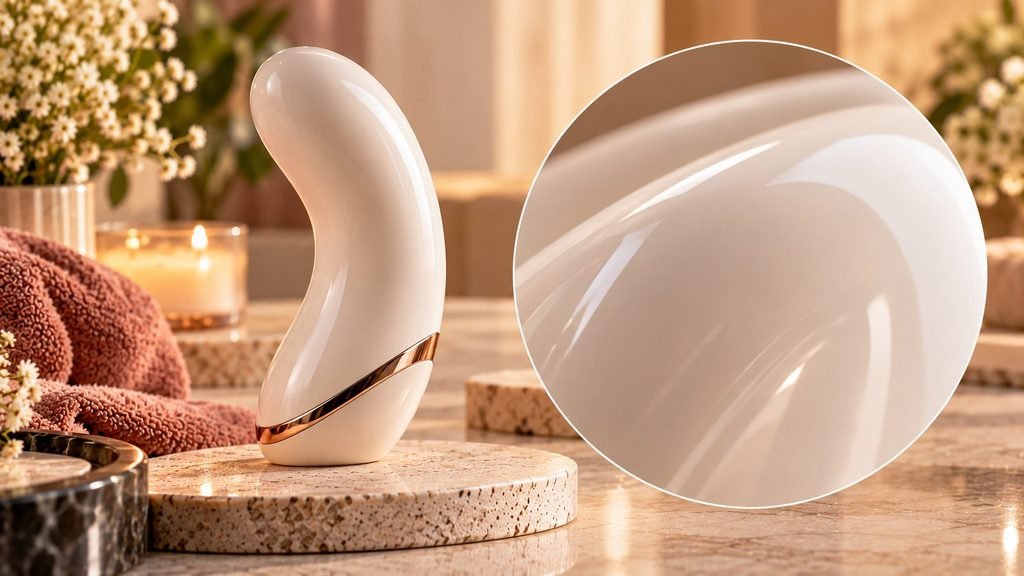
ABS provides a firmer, more rigid feel and is commonly used in structured products and some vibrator components.
Glass

Purpose-made, break-resistant glass products provide a firm and smooth alternative to flexible materials.
Stainless steel
Stainless steel provides a firm, smooth and substantial feel and is non-porous.
For a deeper explanation of these materials, read:
How to Choose a Sex Toy by Material: Silicone, ABS, Glass & More
9. Think About Noise Level
Noise can be an important consideration if privacy matters to you.
A vibrator’s noise level can depend on:
- Motor design
- Vibration intensity
- Product construction
- Surface it is used against
- How close it is to other objects
Don’t assume that “quiet” means completely silent.
If discretion is important, look for products where the manufacturer provides information about noise or describes the product as designed for quieter operation.
However, treat marketing language carefully. A claim such as “whisper quiet” doesn’t provide the same information as a measured decibel rating.
For discreet shopping, also consider the practical environment in which you’ll use the product.
10. Think About Weight and Ergonomics
Weight can make a surprising difference.
A heavier vibrator may feel substantial and stable, while a lighter product can be easier to hold for longer periods.
Consider:
- Overall weight
- Handle shape
- Grip
- Button placement
- Balance
- Whether you can comfortably hold it with one hand
If you have limited hand mobility or strength, ergonomics may be especially important. Sex toys can be useful to people with disabilities or limited mobility, according to Planned Parenthood. Planned Parenthood
The best design isn’t necessarily the smallest or lightest one. It’s the one you can comfortably control.
11. How to Choose a Vibrator for Beginners
If this is your first vibrator, don’t feel pressured to choose the product with the most features.
A straightforward product can be easier to understand and use.
Look for:
- Comfortable size
- Simple controls
- Several intensity levels
- Clearly stated material
- Easy cleaning
- Suitable power source
- Clear manufacturer instructions
You may also prefer a product that lets you start with a gentler setting and gradually explore different levels.
If you’re completely new to sex toys, read our broader guide:
How to Choose Your First Sex Toy
That article covers the wider first-time buying decision, while this guide focuses specifically on vibrators.
12. Choosing a Vibrator for Solo or Partnered Use
Your intended situation can also influence your choice.
For solo use
You may prioritize:
- Comfortable handling
- Easy controls
- Your preferred stimulation style
- Quiet operation
- Simple cleaning
- Rechargeability
For partnered use
You may prioritize:
- Easy controls
- Flexible positioning
- Remote or app control, if desired
- Compact designs
- A shape that works comfortably alongside other activities
There’s no requirement to choose a different type simply because you’re using it with a partner.
Choose according to what you actually want from the product.
If you share sex toys with another person, hygiene becomes especially important. Planned Parenthood recommends washing toys with mild soap and water after use and before they touch another person’s genitals; condoms can also be used on toys and changed between users or body areas. Planned Parenthood
13. Don’t Forget Lubricant Compatibility
Lubricant can make toy use more comfortable by reducing friction.
Water-based lubricant is generally a versatile choice for use with sex toys. Planned Parenthood specifically describes water-based lubricant as a safe option for sex toys and condoms. Planned Parenthood
If you’re considering silicone lubricant, check the vibrator’s material and manufacturer instructions first. Silicone lubricant can react with some silicone toys and damage them. Planned Parenthood
The simple rule is:
Check the lubricant compatibility before using it with your vibrator.
Don’t rely only on the appearance or marketing name of the material.
14. Cleaning and Caring for Your Vibrator
Your vibrator’s cleaning routine depends on its material, construction and waterproofing.
Always follow the manufacturer’s instructions first.
For products that are suitable for washing, mild soap and water may be appropriate. Planned Parenthood recommends cleaning sex toys after use and before they touch another person’s genitals. Planned Parenthood
Before buying, check:
- How the vibrator should be cleaned
- Whether it can be submerged
- Whether the controls need special care
- Whether the charging port needs to remain dry
- How it should be stored
If you’re buying a rechargeable vibrator, don’t expose the charging area to water unless the manufacturer’s instructions specifically allow it.
For a detailed guide:
How to Clean and Care for Your Sex Toys
15. What to Check on a Vibrator Product Page
Before buying, don’t just look at the product photograph.
Read the specifications.
Material
What is the product actually made from?
Dimensions
Check length, width, diameter and weight where provided.
Intended use
Is it designed for external, internal or multiple types of use?
Controls
How many buttons or settings does it have?
Vibration
How many intensity levels or patterns are provided?
Power
Is it rechargeable or battery-powered?
Charging
What charging system does it use?
Waterproofing
Is the product waterproof, water-resistant or neither?
Noise
Does the manufacturer provide useful information about noise?
Care
How should the product be cleaned and stored?
Compatibility
Which lubricants are recommended?
Included accessories
Check what actually comes in the package.
This approach helps you compare products based on facts rather than marketing language.

A Simple Vibrator Buying Checklist
Before you add a vibrator to your cart, ask:
1. What type of stimulation do I want?
External, internal or versatile?
2. What size feels comfortable?
Check the actual dimensions.
3. How much intensity do I want?
Look for an appropriate range rather than simply choosing the strongest motor.
4. Do I want different patterns?
More modes can add variety, but aren’t necessary for everyone.
5. Are the controls easy to use?
Simple controls can be an advantage.
6. Do I prefer rechargeable or replaceable batteries?
7. Does waterproofing matter to me?
8. Is the material clearly specified?
9. Is the product easy to clean?
10. Does the price make sense for the features I’ll actually use?
If you can answer these questions, you’re already much closer to finding a suitable vibrator.
Frequently Asked Questions
What is the best vibrator for beginners?
There isn’t one vibrator that is best for every beginner. A good starting point is a product with a manageable size, comfortable design, straightforward controls, several intensity options and clearly stated material and care instructions.
How powerful should a vibrator be?
That depends on personal preference. Instead of focusing only on maximum power, consider whether the vibrator provides a useful range of intensity levels. A product that allows gradual adjustment can offer more flexibility.
Is a rechargeable vibrator better than a battery-powered vibrator?
Neither is universally better. Rechargeable models can be convenient if you prefer charging between uses, while battery-powered models can be practical if you prefer replaceable batteries. Compare the power system with how you expect to use the product.
What vibrator size should I choose?
Choose based on intended use, comfort and personal preference. Always check the manufacturer’s dimensions rather than relying on product photographs.
Is waterproofing important in a vibrator?
It depends on how you plan to use and clean the product. If water exposure matters to you, check the manufacturer’s exact water-resistance or waterproof rating. Never assume a product is submersible without clear instructions.
What material is best for a vibrator?
There is no universal best material. For products intended for internal use, non-porous materials such as 100% silicone, hard plastic, stainless steel, aluminum and break-resistant glass are among the options recommended by Planned Parenthood. Planned Parenthood
Can I use any lubricant with a vibrator?
No. Lubricant compatibility depends on the vibrator’s material and the lubricant. Water-based lubricant is generally a versatile option for sex toys, while silicone lubricant should be checked for compatibility with silicone products. Planned Parenthood
How do I clean a vibrator?
Follow the manufacturer’s cleaning instructions. Depending on the product, mild soap and water may be suitable, but electronic products should not be submerged unless they are specifically designed for that type of water exposure. Planned Parenthood recommends cleaning sex toys after use and before they touch another person’s genitals. Planned Parenthood
Final Thoughts
Choosing a vibrator doesn’t have to mean comparing dozens of technical specifications.
Start with how you want to use it and what type of stimulation you prefer. Then narrow your choices by size, controls, intensity, power source, material, waterproofing, noise and cleaning requirements.
Most importantly, look beyond the product photograph and read the actual specifications.
A well-chosen vibrator isn’t necessarily the one with the most settings or the strongest motor. It’s the one whose size, design, controls and features make sense for you.
Explore Oppler’s Vibrators collection to compare available designs and features, or continue learning with our Sex Toy Materials Guide and How to Choose Your First Sex Toy.