

Choosing a sex toy is about more than shape, size, or features. The material matters too. It can affect how a product feels, how easy it is to clean, what type of lubricant may be suitable, and how you should care for it.
If you’re comparing silicone, ABS plastic, glass, stainless steel, or other materials, the best choice depends on how you plan to use the product and what features matter most to you.
This guide explains the main differences so you can shop with more confidence.
Quick answer: Which sex toy material should you choose?
There isn’t one material that is best for everyone.
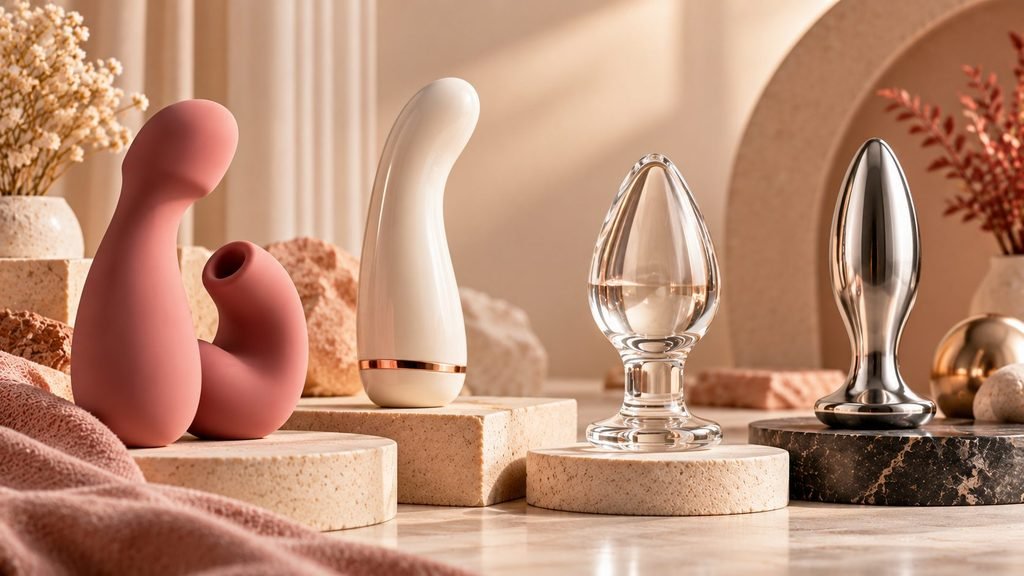
For products intended for internal use, a useful starting point is to look for a non-porous material and then check the manufacturer’s exact material and care instructions. Planned Parenthood lists 100% silicone, hard plastic, stainless steel, aluminum, and break-resistant glass among non-porous options. Planned Parenthood
A simple starting point:
- Silicone: soft, flexible, and commonly used for many modern intimate wellness products.
- ABS plastic: firm and lightweight, often used for structured products and vibrator components.
- Glass: firm and smooth, with a different sensation from flexible materials.
- Stainless steel: firm, durable, and non-porous.
- Other rubbery or blended materials: require closer attention to the exact material and care instructions.
The important point is to check the actual product specification rather than assuming a material from its appearance or marketing description.
Why does sex toy material matter?
Material affects several practical parts of the buying decision.
1. Feel
Different materials provide different sensations.
Soft silicone can feel very different from a rigid material such as glass or stainless steel. Some shoppers prefer flexibility and a softer surface, while others prefer a firm, smooth feel.
There is no universally correct choice. Your personal preference is an important part of the decision.
2. Cleaning
Some materials are easier to keep clean than others.
Non-porous materials don’t absorb fluids in the same way porous materials can, which is one reason they are often preferred for products used internally. Planned Parenthood specifically notes that non-porous materials are easier to keep clean. Planned Parenthood
Always follow the cleaning instructions supplied with your specific product.
3. Lubricant compatibility
Material also matters when choosing lubricant.
For example, Planned Parenthood advises against using silicone lubricant with silicone sex toys unless the toy is covered by a condom, because silicone lubricant can react with some solid silicone toys. Water-based lubricant is described as a generally safe option for sex toys. Planned Parenthood
When in doubt, check both the toy and lubricant manufacturer’s instructions.
4. Care and storage
Your product’s material, construction, electronics, and waterproofing can all affect how it should be cleaned and stored.
That’s why the product instructions should take priority over generic advice.
For more general cleaning guidance, see our guide to how to clean and care for your sex toys.
Silicone Sex Toys

Silicone is one of the most common materials you’ll encounter when shopping for modern sex toys.
It can be soft and flexible, making it suitable for products where a softer feel is desired.
However, not every product described as “silicone” should automatically be treated as identical.
Planned Parenthood specifically distinguishes 100% silicone from silicone blends when discussing non-porous materials. Planned Parenthood
What to look for
When a product listing says silicone, check whether the exact product specification identifies the material clearly.
Look for details such as:
- Exact material name
- Whether the product is described as 100% silicone
- Cleaning instructions
- Waterproof or water-resistant information
- Recommended lubricant
- Whether the product contains electronics
Silicone and lubricant
One important consideration is lubricant compatibility.
Silicone lubricant can damage some silicone toys, so check the manufacturer’s instructions before using it. Water-based lubricant is generally a straightforward option for many sex toys. Planned Parenthood
ABS Plastic Sex Toys
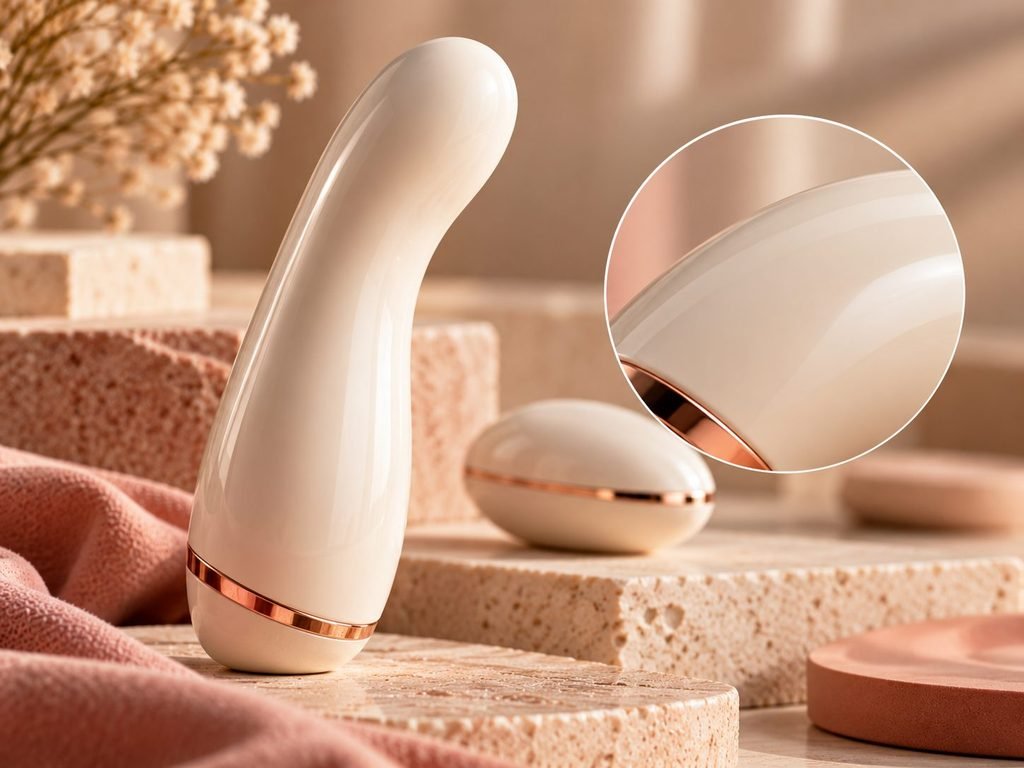
ABS plastic is a firm material commonly found in sex toys and vibrator components.
Unlike soft silicone, ABS plastic provides a more rigid feel.
Why shoppers may choose ABS
ABS can be useful when you want:
- A firm structure
- A smooth surface
- A lightweight product
- A product with a more rigid design
The exact experience will still depend on the product’s shape, size, construction, and intended use.
What to check
Don’t stop at the material name.
Look at the complete product specification and determine:
- Whether ABS is the main body material
- Whether other materials are also used
- Whether the product contains silicone sections
- How the product should be cleaned
- Whether it is waterproof or water-resistant
- Whether batteries or charging are involved
For products intended for internal use, Planned Parenthood lists hard plastic among non-porous material options. Planned Parenthood
Glass Sex Toys
Glass provides a completely different experience from soft silicone.
A glass toy can have a firm, smooth surface and doesn’t flex in the same way as silicone.
For intimate products, however, the type of glass matters.
Planned Parenthood specifically refers to break-resistant glass when discussing non-porous materials suitable for internal use. Planned Parenthood
Before buying a glass toy
Check the manufacturer’s product information for:
- Exact glass type
- Whether it is designed for intimate use
- Whether it is described as break-resistant
- Cleaning instructions
- Temperature-related instructions, if applicable
Never assume an ordinary household glass object is suitable as a sex toy. Purpose-made products are designed with use, construction, and safety considerations in mind. Planned Parenthood also advises using products specifically made as sex toys rather than DIY alternatives. Planned Parenthood

Stainless Steel and Other Non-Porous Materials
Stainless steel is another firm, non-porous material used in some intimate wellness products.
It offers a very different experience from flexible materials such as silicone.
Other non-porous materials may also appear in sex toys, including aluminum and certain types of hard plastic or break-resistant glass. Planned Parenthood
The key is not simply choosing a material because it sounds premium. Instead, check:
- What exactly is the product made from?
- Is the material clearly specified?
- What does the manufacturer say about cleaning?
- What lubricant is compatible?
- Is the product intended for the way you plan to use it?
What About TPE, TPR, PVC, Vinyl and Other Rubber-Like Materials?
This is where shoppers should pay particular attention to the product description.
Materials such as silicone blends, jelly rubber, PVC, vinyl, TPR, TPE, elastomer and other rubbery plastics may be porous. Planned Parenthood notes that porous materials can absorb germs and may be harder to keep clean. Planned Parenthood
That doesn’t mean you should simply guess the properties of a product from its name.
Instead:
- Check the exact material specification.
- Follow the manufacturer’s cleaning instructions.
- Consider a condom when appropriate, particularly if sharing a toy.
- Don’t assume that two products with similar appearances have the same material properties.
How Material Affects Cleaning and Care
Cleaning instructions vary by product.
A toy’s material is only one part of the equation. Electronics, motors, charging ports, seams, controls, and waterproofing can also affect how it should be cleaned.
As a general principle, follow the manufacturer’s instructions first.
For products that can be washed with soap and water, Planned Parenthood recommends washing sex toys with mild soap and water after use and before they touch another person’s genitals. Planned Parenthood
If you’re sharing toys, cleaning becomes particularly important because sexual fluids can potentially transfer infections. Using a new condom on a shared toy between partners or between different body openings can also provide an additional barrier. Planned Parenthood
Related Oppler guide: How to Clean and Care for Your Sex Toys
How Material Affects Lubricant Choice
Lubricant can make toy use more comfortable, but compatibility matters.
Water-based lubricant
Water-based lubricant is a versatile starting point and is generally compatible with sex toys. Planned Parenthood describes water-based lubricant as a safe option with sex toys and condoms. Planned Parenthood
Silicone-based lubricant
Silicone lubricant lasts longer in many situations, but it should not automatically be used with silicone toys.
Check the toy’s instructions first. Planned Parenthood specifically warns that silicone lubricant can damage some silicone sex toys. Planned Parenthood
Oil-based lubricant
Oil-based products have additional compatibility considerations, particularly with latex condoms. Planned Parenthood advises against using oil-based lubricant with latex condoms because it can weaken them. Planned Parenthood
The safest approach is simple: check the instructions for both the toy and lubricant before use.
How to Choose the Right Material for Your Preferences
Instead of asking “Which material is best?”, ask “Which material fits how I want to use the product?”
Choose based on feel
Do you prefer:
- Soft and flexible?
- Firm and structured?
- Smooth and rigid?
Choose based on maintenance
Consider whether you want:
- Straightforward cleaning
- A non-porous material
- A product with simple care requirements
Choose based on features
For vibrators and electronic products, also consider:
- Rechargeable vs battery-powered
- Controls
- Modes
- Waterproof or water-resistant specifications
- Charging method
- Size
Only rely on specifications actually provided for the product.
Choose based on your experience level
If you’re buying your first product, you don’t need to understand every material available.
Start with your preferred feel, intended use, cleaning requirements, and the manufacturer’s stated specifications.
If you’re new to intimate wellness, our guide to how to choose your first sex toy can help with the broader buying decision.

A Simple Sex Toy Material Checklist
Before adding a product to your cart, check:
Material
- What exactly is it made from?
- Is the material clearly stated?
Use
- Is it intended for external or internal use?
- Is it designed specifically as a sex toy?
Care
- How should it be cleaned?
- Can it be washed with water?
- Does it have electronic components?
Lubricant
- Which lubricants are compatible?
- Does the manufacturer warn against a particular lubricant?
Construction
- Are there seams, openings, charging ports, or other areas that need special care?
Specifications
- Are the dimensions and features clearly provided?
Comfort
- Does the material and design match the sensation you want?
Taking a few minutes to check these details can make the buying process much easier.
Frequently Asked Questions
Is silicone the best material for a sex toy?
Not necessarily. Silicone is a popular option, but the best material depends on your preferred feel, intended use, care requirements, and the exact product specification. For internal use, Planned Parenthood recommends looking for body-safe, non-porous materials such as 100% silicone, hard plastic, stainless steel, aluminum, or break-resistant glass. Planned Parenthood
Are all silicone sex toys non-porous?
You should not assume that every product described simply as “silicone” has identical properties. Planned Parenthood distinguishes 100% silicone from silicone blends when discussing non-porous materials. Check the exact product specification. Planned Parenthood
Can I use silicone lubricant with a silicone sex toy?
Not automatically. Silicone lubricant can react with some silicone toys and damage their surface. Check the manufacturer’s instructions first. Water-based lubricant is generally a safe starting option for sex toys. Planned Parenthood
Are glass sex toys safe?
Purpose-made, break-resistant glass can be a suitable non-porous material for sex toys. Check that the product is specifically designed for intimate use and follow its manufacturer’s instructions. Planned Parenthood
Which sex toy materials are easiest to clean?
Non-porous materials are generally easier to keep clean because they don’t absorb germs in the same way porous materials can. Your product’s specific cleaning instructions should always take priority. Planned Parenthood
What should beginners look for when choosing a material?
Start with three things: the feel you prefer, how easy you want the product to be to care for, and the exact material listed by the manufacturer. You don’t need to choose the most complicated option—choose a product whose material and care requirements you understand.
Final Thoughts
The material of a sex toy can affect feel, cleaning, care, lubricant compatibility, and overall shopping confidence.
For many shoppers, starting with a clearly specified non-porous material is a practical approach, particularly for products intended for internal use. But material should never be considered in isolation.
Look at the complete product description, follow the manufacturer’s care instructions, and choose something that fits your preferences and intended use.
Explore Oppler’s Dildos and Vibrators to compare products by design and features, or browse For Her, For Him, and For Couples for more focused shopping.